Full-face helmets trap heat around the head and neck. Chest protection and boots add insulating layers exactly where the body needs to vent it. Combined with the adrenaline and repeated anaerobic bursts of racing, core temperature climbs faster than in almost any other sport, and sweat rate climbs with it. Independent research on motorcycle protective clothing found core body temperature climbing several degrees within 90 minutes in hot conditions, with reaction time slowing as it rose.
By The Sota Fuel Performance Team
Why Riders In Full Gear Lose More Than Anyone Else
Full-face helmets, chest protection, and heavy boots don't just protect riders. They trap heat. Our data shows that's costing action sports athletes far more fluid and electrolytes than average training ever does.

01
The Hidden Cost Of Gear
Every rider knows gear is non-negotiable. What's less understood is what it does to the body once the gate drops.
Core temperatures increased by 2°C, skin temperatures by 3°C, and heart rates by 66 bpm.
Liz de Rome, Accident Analysis & Prevention, 2019
02
What The Data Shows
We compared sweat loss during a typical action sports session against average training at the same duration. The gap opens almost immediately.
Action Sports
Average Training
In gear-heavy sports like motocross, sweat rate climbs far faster than average training, reaching in 15 minutes what an hour of moderate exercise takes to lose.
| Time | Average Training | Action Sports |
|---|---|---|
| 15 min | 150ml | 600ml |
| 30 min | 300ml | 1.1L |
| 45 min | 400ml | 1.6L |
| 60 min | 500ml | 2L |
Illustrative comparison based on typical sweat rates. Individual loss varies with heat, gear, and effort.
03
Why It Matters
Every gram of sodium, potassium and magnesium lost in that gap has to be replaced, not just the fluid. Miss that balance and the body pays for it in cramping, fatigue, and slower recovery.
Exhibit A. Electrolyte Loss Effects
2X
Longer before cramping
+50%
More fluid retained
12%
Lower endurance capacity once dehydrated
2%
Body-weight loss where focus slips
04
How Sota Fuel Helps
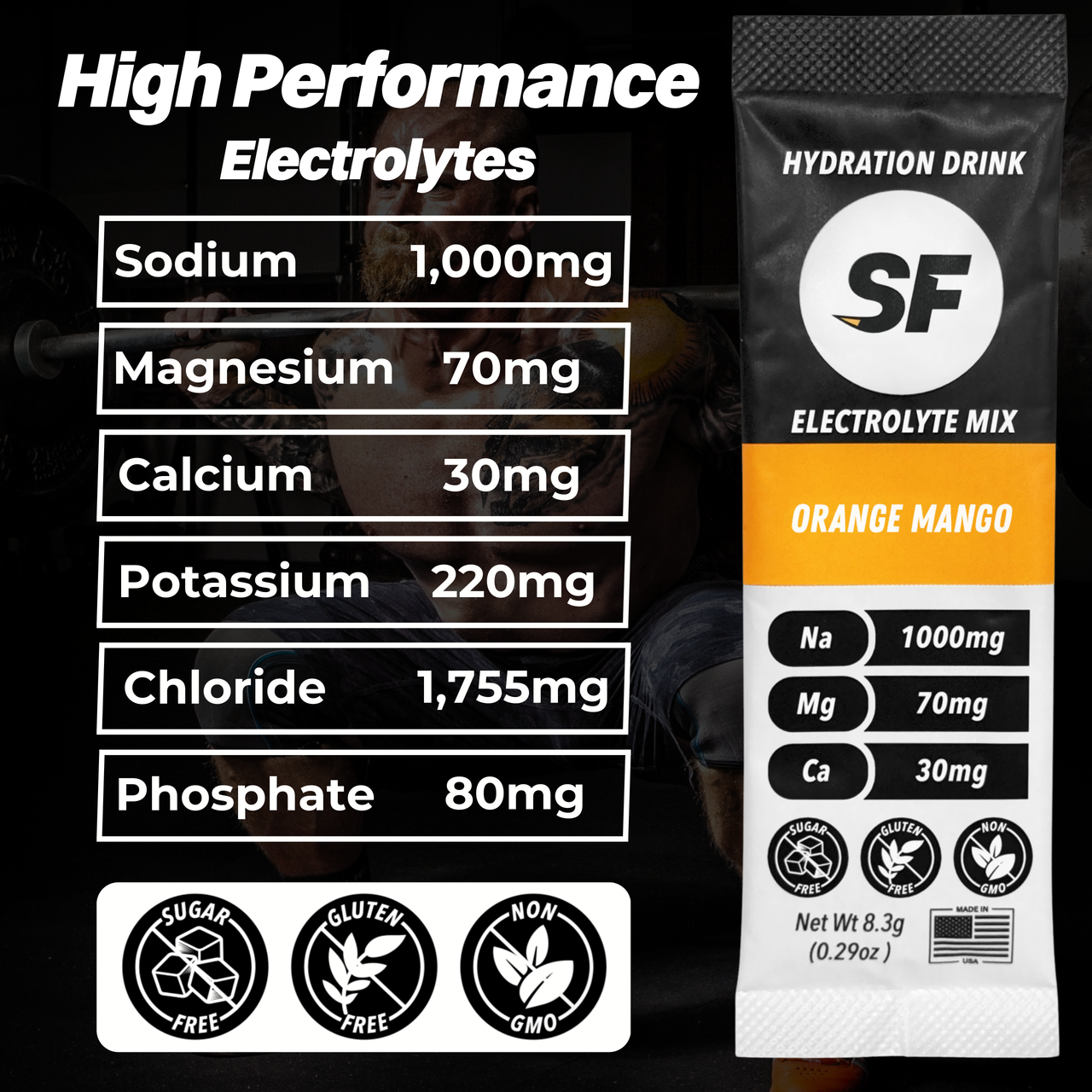
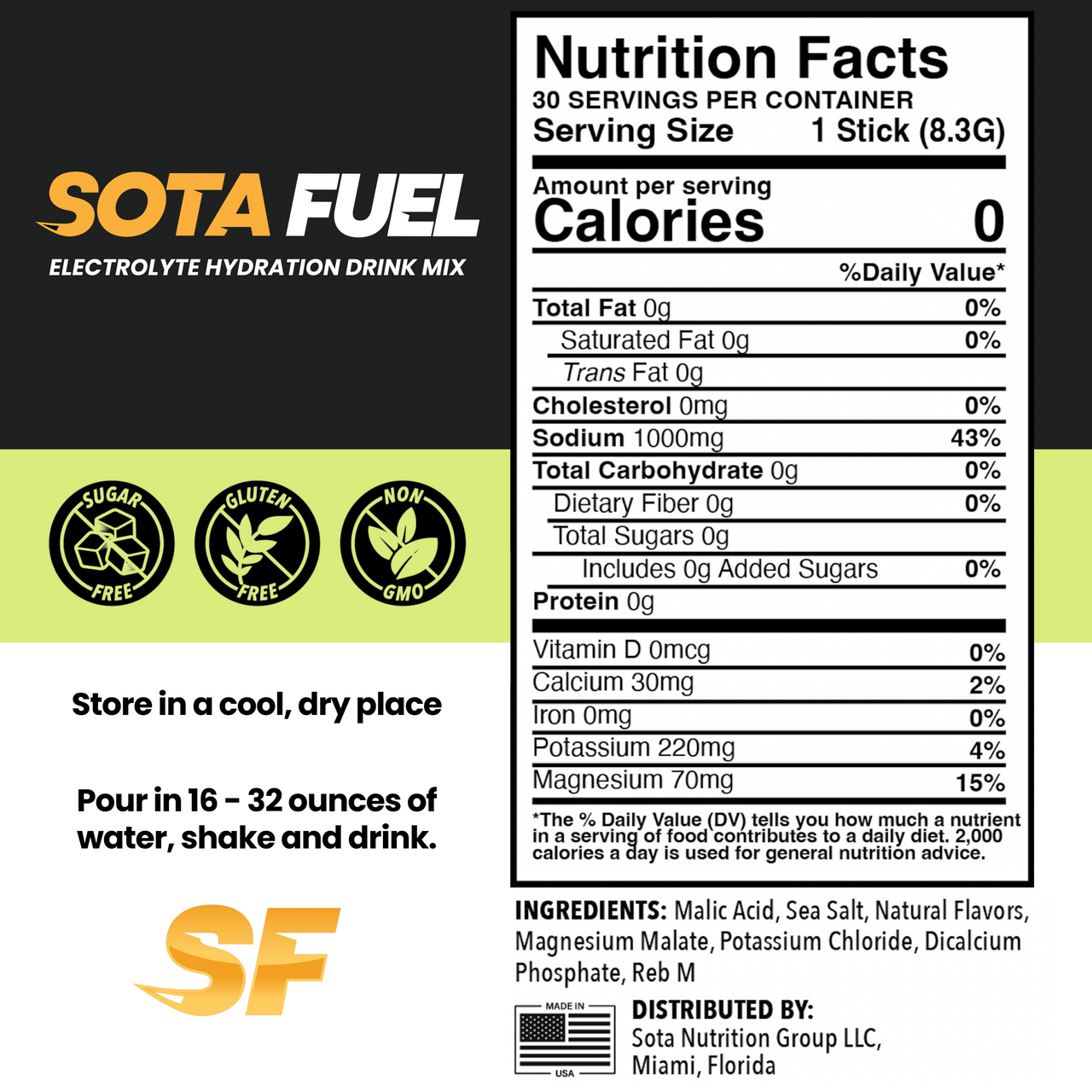
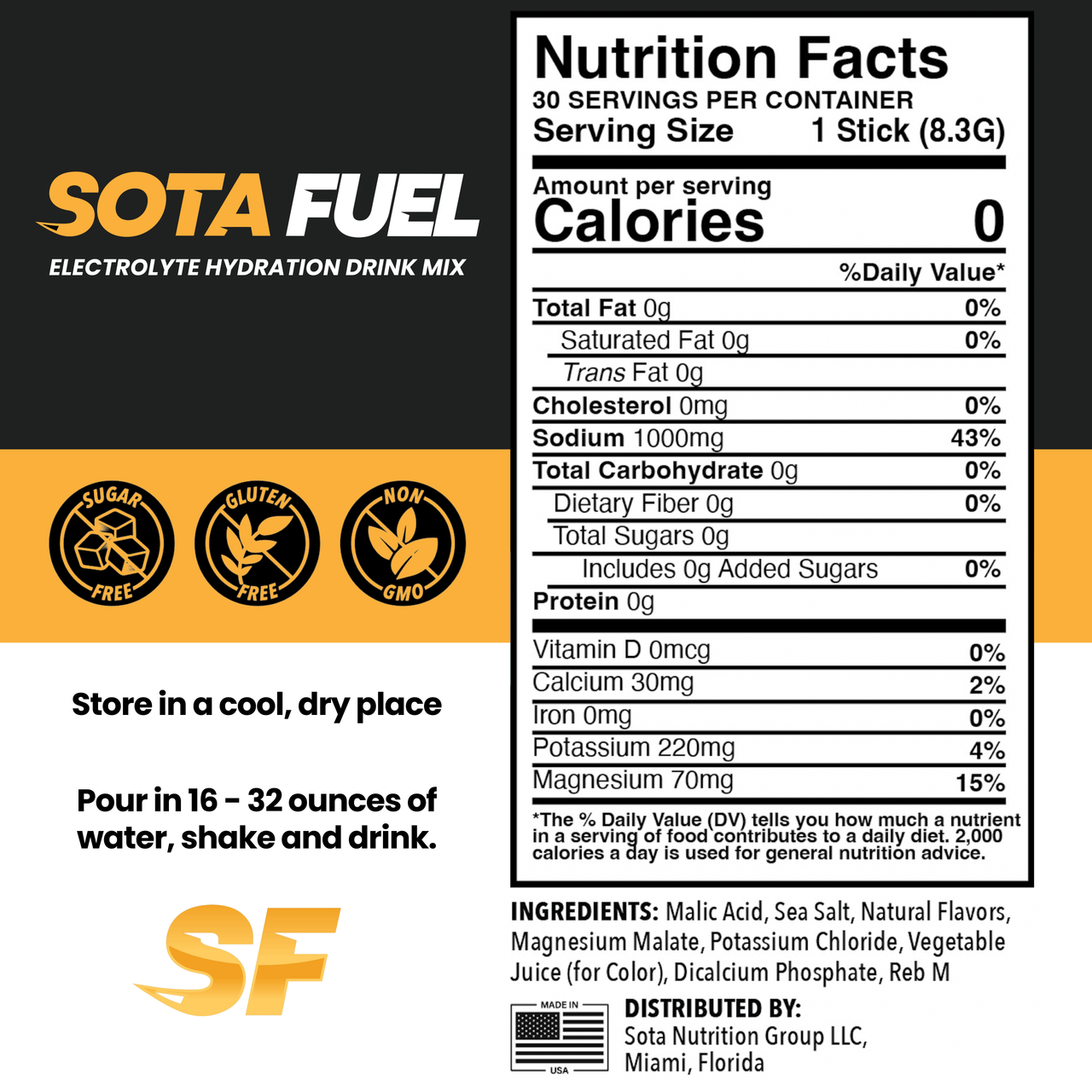
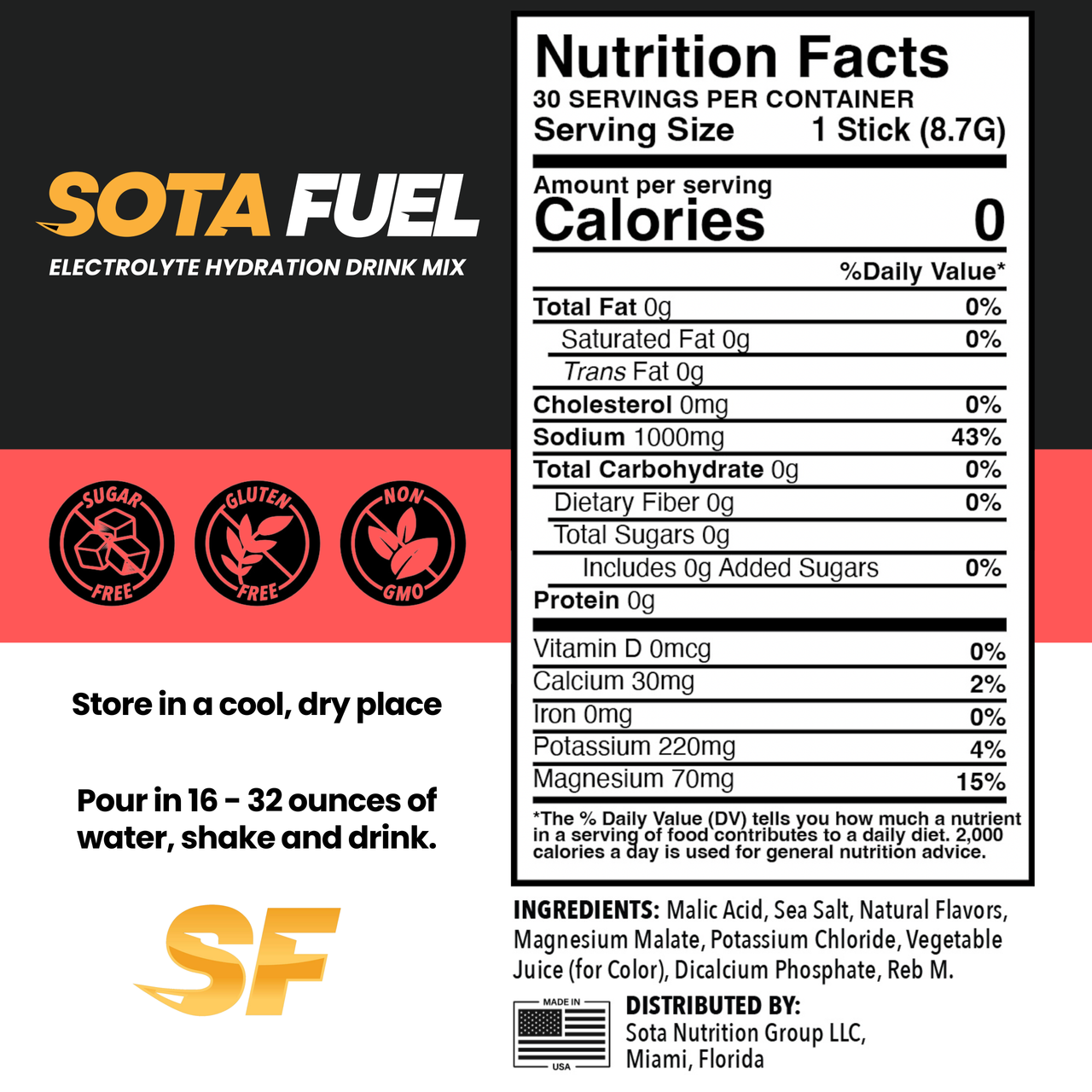
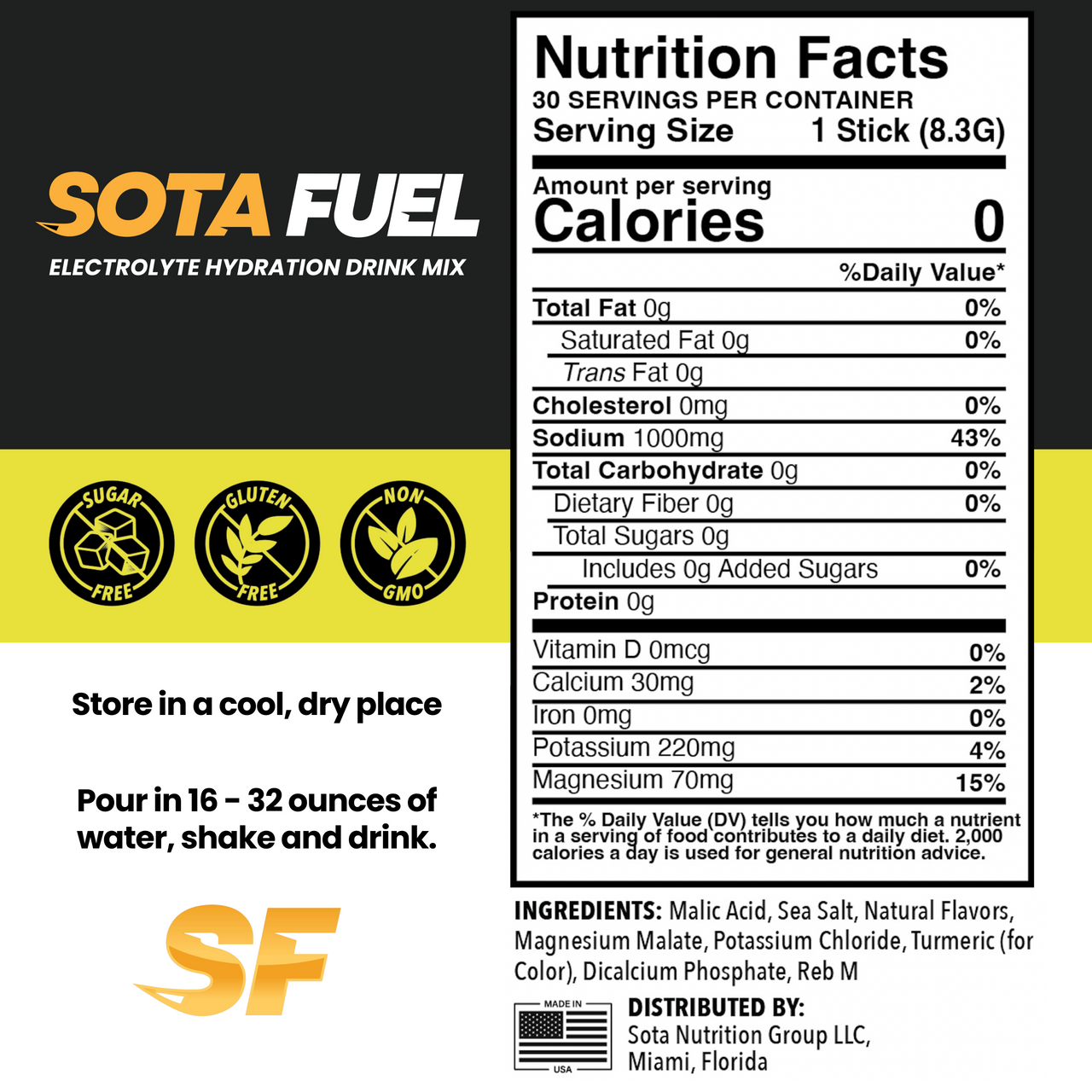
Sota Fuel Hydration Drink Mix is formulated to replace the sodium, potassium and magnesium riders lose fastest under heat and exertion, in the ratio the body actually needs. It's built for exactly this problem, not general hydration.
Action sports demand more than steady endurance training ever does. Heavy gear, high heat, and short explosive bursts push sweat and electrolyte loss past what water alone can replace, often within the first 15 minutes. Left unchecked, that loss shows up fast, in slower reaction time, weaker grip, and earlier fatigue, exactly the moments a rider can least afford it.









Save $10
Get 1 Free